
By Previn Pillay, founder of Pyromin Consulting
Industrial leadership isn’t just strategy and metrics. It’s the moments when everything collapses, the stakes are human lives, and you realise the actual weight of your role.
All images supplied Supplied by Previn Pillay
This story isn’t from a textbook or a polished conference speech. It’s raw, honest, and from the field—a moment that stripped leadership to its barest, exposing what truly matters when everything hangs by a thread.
The flash before the boom
I’ll never forget the sound. Thunderous claps echoed around the building, reverberating like some primal warning. As I sprinted toward Pot Room A, the air itself felt charged. My focus was singular: reach my team.
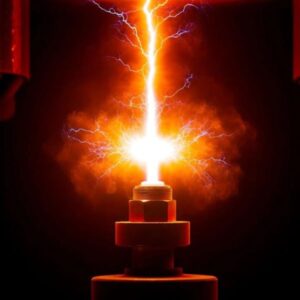
As I rounded the corner into the corridor, I saw it. Jagged bolts of electric-blue lightning raced down the steel girders, staccato bursts lighting up the pot room like an apocalyptic storm. Each flash burned into my retinas. My mind registered one thing: my team was in there.
Then, it happened.
The air seemed to compress, and the sound vanished into an eerie, silent void. The world pulsed—just once.
And then it hit.
BOOM!
The explosion tore through the pot room. A fireball of searing light and heat swallowed everything. A 75-tonne electrochemical cell—the heart of the operation—erupted and hurled partially into the basement, leaving twisted wreckage in its wake. Chunks of 20-kilogramme anode bars hurtled through the air like missiles. The reinforced concrete floor fractured, and steel gratings flew like confetti.
I kept running. My legs moved instinctively, even as my chest tightened with dread. Acrid and suffocating smoke filled the room. My only thought was: Where is my team? Please let them be alive.
Survival amid chaos
Through the thick, black haze, I saw movement. Sizwe, the shift supervisor, stumbled toward me from the emergency stop panel, coughing and spluttering. Relief flooded me as I grabbed his arm.
“Sizwe! Where’s the rest of the team? Are they okay?”
“They’re outside,” he managed between heaving breaths. “I told them to run when we couldn’t control it.”
I closed my eyes, choking back the wave of gratitude threatening to overwhelm me. My team was safe. The plant was a war zone, the damage catastrophic, but my people were alive. That was all that mattered.
The anatomy of a catastrophe
Once the immediate danger had passed, I escorted my team to the control room, ensuring paramedics checked them. People from nearby pot lines began gathering, trying to make sense of the chaos. I shouted to keep them back: the site wasn’t safe.
While the plant underwent a complete shutdown—a rare, last- resort measure in aluminium smelting—I sat down with Sizwe to unravel what had gone wrong.
The team had been conducting beam raising, a high-risk operation that involves manually raising the superstructure beams by loosening the clamps holding the large metal anode stems in place. A specialised tool secures the anodes during this process, preventing them from falling into the molten aluminium bath.
But that day, things went catastrophically wrong.
As the team began the operation, one of the anodes developed an anode effect. In this phenomenon, greenhouse gases form at the base of the carbon anode, disrupting the electrical flow. The gas bubble expanded, creating energy surges and causing the molten aluminium bath to move unpredictably.
Operators tried to dislodge the gas bubble with bamboo poles—a standard response—but it only worsened. Sparks flew from the superstructure as the electrical instability deepened. To make matters worse, one of the anodes wasn’t adequately secured to the unique tool, causing it to drop further into the bath.
The final warning
This was when Sizwe first radioed me. His voice sounded calm, almost routine. “Previn, can you come to Pot Room B, please?” “Sure,” I radioed back, setting off on a brisk walk.
Seconds later, his voice crackled through again, tinged with urgency. “Previn. Come quickly. I think we’ve got a problem here.”
I broke into a jog, my pulse quickening. Then came the crescendo.
“It’s out of control! It’s out of control! Help! We can’t… it’s too bad… we can’t—”
His transmission cut out, replaced by static.
The explosion
By the time I reached the pot room, the scene was chaos. The cell was in a completely open circuit, the current spiking uncontrollably. Several anodes had dropped into the bath, triggering a chain reaction. The ground shook beneath me. The walls crackled with energy, vibrating as if alive.
And then the world erupted.
The aftermath
As the smoke cleared, I saw what was left of the cell: a crater of destruction. The 75-tonne structure was half-sunken into the basement, its remains smouldering. The floor was shattered, and debris was scattered everywhere.
My team stood outside, shaken but unharmed. The Emergency Response Team was on-site, with paramedics performing quick checks on everyone. In the control room, senior leaders huddled to assess the situation.
A shutdown in aluminium smelting is a last resort; prolonged power loss risks the entire plant freezing, potentially costing billions. But in that moment, production didn’t matter. People did.
Lessons forged in fire
That day changed how I saw leadership. I realised that no procedure or protocol can fully prepare you for the reality of a crisis. It’s in those moments that your true priorities emerge:
- Safety is a culture, not a checklist: Protocols are only as effective as the culture that upholds
- When in doubt, stop: “Nearly safe” is NOT Full stop.
- Leadership requires presence: In a crisis, being there—visible and calm—can make all the
- The team comes first: No machine or process is worth more than the people who run
A legacy of resilience
Reflecting on that day, I don’t think about the destruction. I think about Sizwe, the team, and our choices that saved lives.
Leadership isn’t about titles or strategies. It’s about showing up when it matters most. It’s about standing in the fire, making the hard calls, and walking out with integrity and people intact.
| Introducing Previn Pillay:
Pillay, FAusIMM TFIEAust CEngT NER IntET (Aus), is a visionary leader and seasoned operational strategist with over two decades of experience transforming industrial operations across mining, natural resources and manufacturing sectors. As the founder and CEO of Pyromin delivering million-dollar savings to businesses worldwide. A Fellow of Engineers Australia and AUSIMM, he combines deep technical expertise with a commitment to sustainable, innovative solutions that leave a lasting impact. Pillay’s passion lies in empowering organisations to thrive in complex environments while harmonising profitability with purpose. |
 Previn Pillay, founder of Pyromin Consulting |