
By Eamonn Ryan, editor RACA Journal | Cold Link Africa
The current trend towards integrating systems marks a significant shift from traditional methods, where mine ventilation and cooling systems operated in silos.
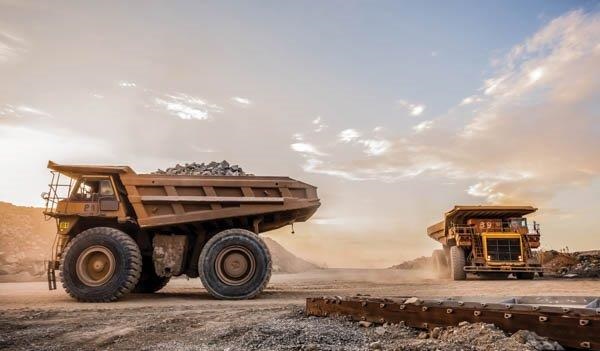
ABB Ability eMine integrates electrification and digital systems from mine-to-port. All images supplied by ABB
At Electra Mining in early September 2024, ABB sales manager for Process Automation, Martin van Zyl described the company’s commitment to enhancing operational efficiency and sustainability in mining through advanced Mine Ventilation control technologies – thereby optimising capital expenditure while also addressing operational expenditure.
At the exhibition, ABB showcased its ABB Ability™ Ventilation Optimizer. These systems are crucial for underground mining operations, where effective air quality management is paramount. The company’s distributed control system, known as System 800 XA, interfaces with sensors to monitor air quality and with other operational systems to optimise ventilation based on real-time data. This proactive approach not only enhances safety by preventing the circulation of air during hazardous conditions, such as a fire, but also improves overall energy efficiency.
ABB’s control system capabilities allow for real-time monitoring and management of multiple systems that affect air supply in mines. By controlling not just a single fan but all fans across different levels from the surface, the system provides a significant advantage.
These integrated systems are designed to respond dynamically to environmental conditions. For example, if CO2 levels rise in a specific area, the system can automatically adjust ventilation operations, ensuring optimal air quality throughout the mine. This unifies energy management, power management and process automation under a single platform. This holistic approach allows for better coordination between different operational aspects. By leveraging data from various systems, it can optimise cooling solutions based on real-time conditions. For instance, if only a few personnel are present in a section, the system can reduce airflow accordingly, leading to energy savings without compromising air quality. Conversely, in high-activity areas with diesel equipment, the system can increase airflow to ensure safety.
Electrification and decarbonisation of mining fleets
Underground mining operations are forging ahead with the introduction of electric vehicles (EVs). However, this transition brings its own set of challenges, particularly regarding electrical distribution and charging logistics.
The ABB eMine™ portfolio consequently includes advanced fast-changing technology capable of charging electric vehicles in as little as 10-15 minutes. This rapid charging capability delivers up to 600 amps to a vehicle, significantly enhancing operational efficiency. However, the effectiveness of this technology hinges on the evolving capabilities of battery systems, which must be able to safely handle such high currents without risk of damage.
While the fast-charging solutions are a step forward, van Zyl acknowledges that many mining operations still rely on fossil fuels. The ultimate goal is to transition to an all-electric mine powered by renewable energy sources, and he says that many of ABB’s mining customers are already making strides in this direction by securing Independent Power Producer (IPP) agreements to develop renewable energy projects.
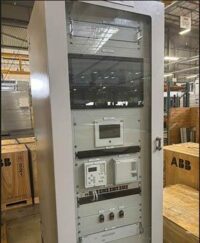
Digital Panel from ABB.
ABB is also enhancing underground vehicle operations through the introduction of Trolley Assist systems. This system enables electric vehicles to connect to the grid while in operation, allowing for simultaneous battery charging. This innovative technology, which has been successfully implemented in Sweden, represents a significant advancement in underground mining.
“The rapid pace of technological advancements in this space has been remarkable, with impressive technology advances occurring every six months. ABB’s ongoing research and development (R&D) efforts continue to enhance the capabilities and efficiency of electric vehicles and their charging systems,” says van Zyl.
He also highlighted the need for mining operators to embrace new technologies that can make a substantial impact on both costs and sustainability. By leveraging systems like Trolley Assist, Battery Fast- Charging and Ventilation Optimizer, ABB aims to drive the adoption of electric solutions that not only optimise performance but also reduce environmental footprints.
Digital switchgear: A leap forward
ABB also invests heavily in R&D focusing on digital switchgear that can replace traditional components with sensor technology, enhancing efficiency and reducing costs. This innovation simplifies stockholding and transport logistics, saving energy and contributing to carbon neutrality goals. Quite a few of ABB’s factories are already carbon neutral, with plans to complete all factories by 2030. “The company helps clients meet their carbon neutral targets by providing sustainable Solutions. While South Africans may not be fully aware of carbon taxes, exporters are, and ABB assists them in becoming more efficient to comply with these regulations,” says Graham Abrahams, senior vice president, Electrification, Commercial Leader.
The digital switchgear developed by ABB can replace traditional current transformers (CTs) and Voltage Transformers (VTs) with advanced sensor technology. This shift allows for a more efficient monitoring and management system within mining operations. By utilising just two sensors capable of covering a wide current range, ABB significantly simplifies stock management in mining environments.
This innovative switchgear connects seamlessly to supervisory control and data acquisition (SCADA) systems or distributed control systems, facilitating real-time data access and management.
The energy consumption associated with conventional CTs can be substantial over the life of switchgear; in contrast, the sensor technology provides a millivolt signal, resulting in considerable energy savings over the lifespan of the equipment. These savings not only enhance operational efficiency but also contribute to miners’ carbon neutrality targets.
ABB also showcased a compact substation made from glass- reinforced plastic, which offers superior insulating properties and increased fire resistance compared to traditional steel enclosures. This innovative material represents ABB’s focus on creating safer and more efficient solutions for the mining industry.