
By Sharon Mdaka
As mining companies accelerate renewable energy rollouts, the industry conversation is shifting from ambition to execution. Solar and wind installations are no longer the headline. The real challenge is how to make hybrid energy systems reliable, cost-effective and bankable.
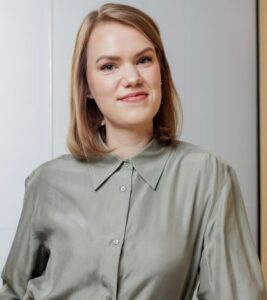
Ella Teperi, general manager for Market and Financial Analysis at Wärtsilä Energy. Supplied by Ella Teperi
At Mining Indaba 2026, discussions around decarbonisation highlighted that simply adding renewable capacity is only the first step. Without optimisation, many microgrids risk underperforming financially and operationally.
Ella Teperi, general manager for Market and Financial Analysis at Wärtsilä Energy, argues that the gap between installed assets and actual performance is where mines are leaving value on the table.
“Decarbonising energy is one of the most feasible ways for mines to reduce their footprint,” she says. “But simply adding megawatts of solar or wind is not enough. If the system isn’t optimised holistically, you don’t get the financial or environmental benefits you expect.”
Mining operations, particularly remote sites operating islanded grids, face a unique technical challenge. Renewable generation is inherently volatile. Solar output can drop within seconds under cloud cover. Wind fluctuates constantly. Meanwhile, mines require uninterrupted, high-reliability power.
Operators are, therefore, balancing multiple variables in real time: battery storage levels, engine loading, renewable dispatch, and reserve margins. Without advanced co-ordination, this complexity can result in inefficiencies, renewable curtailment and, in worst cases, instability.
Teperi explains that optimisation is fundamentally about turning intermittent resources into predictable systems. “You must look at the grid as a whole. If assets are dispatched in isolation, you’re running engines or batteries suboptimally. That reduces efficiency and increases cost. The real gains come from integrating everything through intelligent control.”
The financial dimension is just as important as the technical one. Across Africa, the biggest barrier to renewable adoption is often not intent but return on investment. Projects that fail to deliver expected savings quickly lose internal support.
“Renewables are already the cheapest form of new energy in many regions,” Teperi notes. “So decarbonisation can be a win-win. It’s good for emissions, and it’s good for the bottom line. But mines need to measure whether they are achieving their targets. That’s where optimisation becomes critical.”
Her assessment of the sector is cautiously optimistic. Mining companies are moving in the right direction, driven by both environmental pressure and commercial logic. However, she believes the industry still tends to frame decarbonisation as an equipment exercise rather than a systems engineering challenge.
In practice, she emphasises that this is enabled by an intelligent energy management system that uses renewable and load forecasts and dispatches all assets. “There is still work to be done in shifting the mindset. It’s not about installing assets. It’s about engineering an integrated energy system that delivers reliability 24 hours a day,” she says.
Looking beyond the Indaba, the next phase of the conversation will centre on accountability and long-term performance. Mines are increasingly asking how to lock in savings, reduce risk and ensure energy strategies remain viable over the life of an operation.
“The important question is how we turn ambition into something concrete over the long term,” Teperi says. “That requires partnerships that are focused on outcomes, not just technology delivery.”
As African mining deepens its decarbonisation journey, optimisation is emerging as the quiet determinant of success. The industry is no longer debating whether to transition. The focus now is on how to engineer renewable systems that work in the real world.