
By Sharon Mdaka
With the 2026 Investing in African Mining Indaba (MI26) having come and gone, the real work now begins. The four-day event, held in Cape Town, was abuzz with optimism as the African mining ecosystem gathered to have meaningful engagements on opportunities, technology and Africa’s mineral potential.
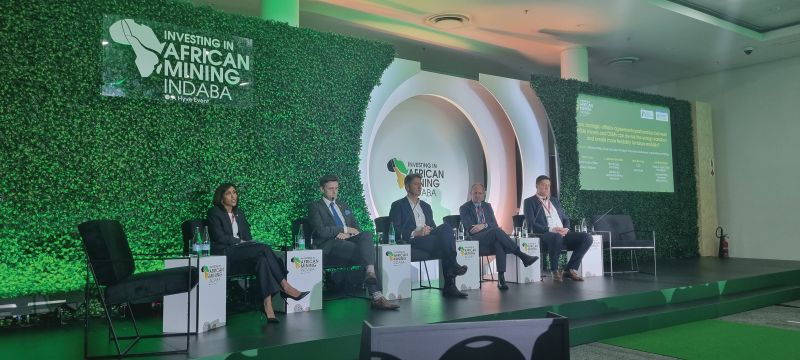
© African Mining, Incorporating Mining Mirror
On the opening day of the conference, South Africa’s Minister for Mineral and Petroleum, Gwede Mantashe, highlighted the importance of the African continent working together as one. Warning that intensifying geopolitical competition over natural resources poses a growing threat to resource-rich developing countries. While addressing delegates, Mantashe said this year’s theme, ‘Stronger Together: Progress Through Partnerships’, was a strategic necessity for Africa.
The message was well received, prompting more conversations around execution, investment, automation and policy frameworks, moving the industry forward throughout the conference. From interviews to panel discussions, the sector understands the opportunities that lie in front of them. Now the question is, how will the industry be channelling these opportunities into tangible progress long after the conference?
A look into PGMs
Breaking down the discussions and sentiments around the Platinum Group Metals, Arnold van Graan, head of Research at Nedbank CIB, explained that there’s a shift in the basics shaping the Platinum Group Metals market. According to van Graan, constrained supply is no longer theoretical. It is structural.
“Our view is that supply at best could be flat for the next three years and then we see it coming down. The only way to arrest that decline is for the industry to spend capital to recapitalise some of these mines.”
Stating that uncertainty around demand destruction from battery electric vehicles has softened, creating a more balanced outlook, he said, “There is less of a demand side risk than there was three years ago. That shift has brought renewed investor interest into the sector.”
In terms of investment, however, it remains closely tied to policy certainty. According to Van Graan, stable regulatory frameworks remain central to capital allocation decisions. “What investors ultimately need is policy certainty and solid fundamentals. South Africa has made progress in infrastructure and energy reliability, but consistency remains key.”
The discussion reflects a broader reality across African mining. Capital is available, but increasingly selective. Investors are looking for jurisdictions and operators that can demonstrate long-term discipline rather than short-term opportunity.
ESG as a supply chain leverage
On day three, the conversation on PGMs moved towards responsible sourcing and ESG-driven partnerships. Speaking during a panel session on strategic offtake agreements between PGM miners and OEMs, J.J. Messner de Latour, Sector Lead at the
Initiative for Responsible Mining Assurance (IRMA), highlighted how sustainability has always been embedded in the PGM story, from emissions reduction in automotive history to today’s responsible mining standards.
He said that 44% of the global PGM market is now represented within the IRMA system, signalling strong momentum toward supply chain transparency as OEMs push for greater ESG compliance.
Emphasising that ESG considerations have now moved from being a compliance in theory to becoming a reality, the panel also highlighted how downstream buyers in the automotive sector are reshaping expectations around responsible sourcing.
De Latour said, “The automotive sector is pushing for responsible mining standards. Direct offtake agreements create leverage within complex supply chains. That leverage is being used to demand transparency and verified performance.”
He pointed out that the PGM sector has been an early mover in adopting international responsible mining standards, with a significant portion of global production now represented within the IRMA framework. As due diligence regulations tighten in regions such as the European Union, responsible sourcing is becoming a competitive requirement rather than a reputational add-on.
The implication for African producers is that ESG is not a side conversation but rather, directly linked to market access and long- term partnerships.
Decarbonisation
Another conversation that captured audiences across the conference was renewable energy. Looking at the gap between installing assets and operating integrated energy systems.
Many mining operations have aggressively invested in solar and wind capacity to reduce grid exposure, yet performance challenges remain.
Energy specialists at the indaba emphasised that optimisation, not only installation, will determine whether renewable investments deliver meaningful returns. High renewable penetration introduces volatility that requires specialised co-ordination of storage, dispatch and reserve capacity.
The transition is not only about replacing one energy source with another but also about engineering resilient systems capable of supporting heavy industrial loads. As mines pursue decarbonisation targets, reliability and return on investment are emerging as the true tests of success.
Safety remains non-negotiable
While the industry showed positive long-term progress in reducing fatalities and occupational illness, the Minerals Council South Africa highlighted a concerning regression in falls of ground incidents.
Health and safety discussions at the Indaba reinforced the importance of leadership accountability, sharing of knowledge and information and collaboration. Safety performance remains one of the clearest measures of whether innovation is being implemented responsibly.
Beyond investments and policies, the conference was well attended by young professionals and women in mining, who also shaped the conversations, moving the mining sector forward. Which indicated that, as a sector, the industry as we know it has evolved.
Innovation discussions increasingly included automation, AI integration and new skills pathways, pointing toward a future workforce that is both technically fluent and globally connected.
Where to next?
The optimisation at the MI26 was undeniable. The conference proved that the industry does not lack ideas. The industry understands where the challenges are, from investment, energy transition, ESG compliance and safety performance. What remains uncertain is how effectively those conversations translate into action across the year ahead.
Africa holds extraordinary mineral potential at a time when global demand for critical resources is intensifying. The opportunity is a once-in-a-lifetime, but so is the responsibility. The continent’s mining future will depend not only on what was said in Cape Town, but on the partnerships, reforms and operational decisions that follow.
If the optimism of this year’s Indaba is to mean anything, the dialogue must extend beyond conference halls. It must live in boardrooms, government offices, project sites and community engagements across the continent. That is where the real work begins.